
Sticking to its stand, the Bharatiya Janata Party government in Karnataka on Saturday asserted that it would not entrust the probe into the illegal mining issue to the Central Bureau of Investigation, but said a report would be submitted to the Supreme Court on the issues raised by a committee appointed by the apex court.

The panel might also decide on a new chairman.

Salient features of the National Sports Governance Bill that promise to overhaul several aspects of sports governance and the grievance redressal system for athletes and administrators alike in the country.

The CEC gave its latest report to the Supreme Court on Thursday.
The Karnataka government would abide by the Supreme Court decision on the recommendation of Central Empowered Committee to extend Central Bureau of Investigation probe into illegal mining in the state, Chief Minister D V Sadananda Gowda said on Friday.
The apex court also referred to a central empowered committee report that 31 hills or hillocks have vanished in the state's Aravalli area.

The apex court directed the CBI, which is already probing the case, to file its status report in the matter within three months.
After being ticked off by the Supreme Court-appointed Centrally Empowered Committee over "erroneous and incomplete data" on mining, Goa Chief Minister Manohar Parrikar has sought to deflect the blame on erstwhile Congress regime for the "mess-up".
The Supreme Court on Thursday cancelled 49 mining leases due to illegalities in Bellary, Tumkur and Chitradurga districts of Karnataka, but allowed resumption of activity in mines with lesser illegalities, as recommended by a Central Empowered Committee. CEC had categorised the mines in the area in three categories -- A, B and C. The mines with least or no irregularities were categorised as 'A' and those with maximum illegalities were placed in category 'C'.
Expressing shock at the magnitude of the alleged illegal export of 35 lakh metric tons of iron ore by private firms in Karnataka, the Supreme Court on Thursday said it wants to explore the possibility if the guilty could be punished within six months.
With the probe of the Centre-appointed Shah commission into alleged irregularities entering its last lap, Goan miners have started bracing themselves for a possible Karnataka-like blanket ban on mining and exports.
The Supreme Court on Monday lifted its ban on iron ore mining operations in Karnataka by those companies which had not flouted lease conditions. A three-judge bench headed by Justice Aftab Alam accepted the report of its Central Empowered Committee, which had said that Category 'A' leases which consist of 21 operational and 24 non-operational leases should be allowed to carry on their business as they have not violated any rules.
The Supreme Court on Friday suspended mining activities in Tumkur and Chitradurga districts of Karnataka, saying it would not change its order until a proper rehabilitation programme is formed. A three-judge forest bench headed by Chief Justice S H Kapadia gave the order on a recommendation by its expert panel for halting extraction of iron ores in Tumkur and Chitradurga districts of Karnataka.
The Supreme Court-appointed Central Empowered Committee on Friday said that large-scale illegal mining was going on in Karnataka, particularly in Bellary district, in connivance with officials and public representatives.A special forest bench headed by Chief Justice S H Kapadia issued a notice to the state government and sought its response on various findings in the CEC's interim report, including the export of 304.91 lakh metric tonnes of iron ore without valid permit.

Sports Bill will end stagnation; bring in transparency: PT Usha in Rajya Sabha

The mining scam had first rocked Karnataka and now Goa. While the mess in Karnataka is well known, the scenario in Goa is no different. The Central Empowered Committee in its interim report on illegal mining in Goa has found various illegalities in its detailed report, a copy of which is with Rediff.com.
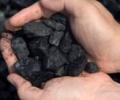
Bench, however, did not pass any order against 68 other mines
Karnataka Governor H R Bhardwaj on Thursday again turned the heat on the Bharatiya Janata Party government in the state, accusing it of inaction on the Supreme Court-appointed Central Empowered Committee's report on illegal mining.

The National Sports Governance Bill was on Tuesday passed by the Parliament with Rajya Sabha giving its nod a mere 24 hours after Lok Sabha.
Karnataka Tourism Minister G Janardhana Reddy on Friday night said the Supreme Court-appointed Central Empowered Committee's report -- describing as 'illegal' the mining of iron ore by the Obulapuram Mining Company owned by him in Andhra Pradesh-Karnataka border -- was not that of the apex court. He said the report by the CEC is an 'ex parte report' since the Obulapuram Mining Company "was never heard before

As the results of last year's AITA elections stay unannounced, the rival factions in the national tennis federation have picked separate team managers for the upcoming Davis Cup tie against Switzerland, leading to an ego tussle between the members.
SC has asked Posco to submit a composite forest diversion proposal for its steel project in Orissa, thereby putting the company in a Catch22 situation.
Posco's mega steel plant in Orissa is inching forward with the Union Ministry of Environment and Forests clearing a proposal under which Posco will plant trees on an area equivalent in size to the forest land where the project is coming up.

Sports Minister Mansukh Mandaviya said the Sports Bill is a key reform aimed at building a "transparent, accountable and world-class sports ecosystem" in India.

Gautam Gambhir has always been against the mega-star culture prevailing in Indian cricket but Mohammed Siraj's Herculean effort throughout the English summer has definitely given the Indian head coach a real shot in the arm.
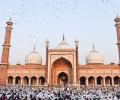
'Only because of the absence of a dedication record in writing, how can such properties be treated as located on misappropriated government land?'
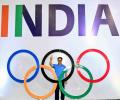
Parliamentary Affairs Minister Kiren Rijiju feels that the National Sports Governance Bill, which is set to be tabled in the monsoon session beginning on Monday, will usher in a 'new era' for sports in India.

The Supreme Court of India will hear a batch of pleas seeking a probe into the alleged unauthorised use of Pegasus spyware for the surveillance of journalists and others next week. The court had previously ordered a technical panel to investigate the matter but received no reports. Senior advocate Shyam Divan, appearing for some petitioners, urged the court to pass directions as the reports were not shared. The court has now listed the matter for hearing on April 29.

Terming it a "very sorry state of affairs", the apex court said the state was just trying to find some excuse or the other.
The Supreme Court of India on Tuesday questioned the issue of using "spyware against terrorists" and stated that any report touching upon the country's "security and sovereignty" won't be made public. The court indicated it might address individual concerns regarding privacy breaches, but the report of the technical committee would not be a document for public discussion. The court will examine the extent to which the report can be shared publicly. The court's statement came during a hearing on a petition related to the alleged use of Pegasus spyware for surveillance. The court also emphasized that "having spyware is not wrong, against whom you are using is the question" and that the security of the nation cannot be compromised. The hearing has been adjourned to July 30.
The Rajya Sabha on Wednesday approved the biggest tax reform since Independence.

The Centre on Wednesday told the Supreme Court that nobody can claim right over government land and it is legally empowered to reclaim properties which are declared waqf by using the waqf by user principle.
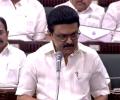
Tamil Nadu Chief Minister M K Stalin has announced the formation of a panel headed by a retired Supreme Court judge to study the relationship between the Union and state governments and ensure state autonomy. The panel, which will submit its interim report in January 2026 and its final report in two years, will examine the transfer of subjects from the State List to the Concurrent List, citing the National Eligibility-cum-Entrance Test (NEET) as an example of a subject outside state purview.

They've proposed a sub-committee under the proposed GST Council or the Empowered Committee of State Finance Ministers to resolve any disputes in the tax's implementation.

The Supreme Court of India began hearing a batch of petitions challenging the constitutional validity of the Waqf (Amendment) Act, 2025. The bench, led by Chief Justice Sanjiv Khanna, asked both sides to address whether the court should entertain the petitions or relegate them to the high court. The hearing is underway with senior advocate Kapil Sibal arguing for the petitioners. The act, which was passed by Parliament following heated debates, has been challenged by various parties including AIMIM leader Asaduddin Owaisi, All India Muslim Personal Law Board (AIMPLB), and Jamiat Ulama-i-Hind.
The All India Muslim Personal Law Board (AIMPLB) has announced its intention to challenge the Waqf (Amendment) Bill in court, labeling it a "black law" that threatens the community's rights. The AIMPLB, a major organization representing Muslims in India, asserts that the Bill, if passed, would lead to the seizure of Muslim properties and undermine the autonomy of Waqf Boards. The organization plans to launch nationwide protests against the Bill, echoing the farmers' agitation, and has urged all citizens to resist the legislation. The Bill has been met with criticism from various quarters, including opposition parties, who claim that the Centre is rushing it through Parliament without adequately addressing concerns raised by the Joint Parliamentary Committee (JPC).

Radha Timblo, a Goa-based miner whose name figures in the black money list submitted by the Centre in the Supreme Court, on Tuesday denied having any "undisclosed" bank account in the country or abroad.

Given the possibilities that next year's assembly elections could throw up, Stalin told the state assembly that an interim report had to be submitted by January 2026. The outcomes may well find its way into the DMK's poll manifesto, thus seeking to keep the electoral focus still on the BJP-ruled Centre and Prime Minister Modi, observes N Sathiya Moorthy.
